

Creating bingo cards for your own game can be surprisingly straightforward. Whether you're organising a traditional game at home or exploring online bingo, the key is choosing the right format, deciding how many cards you need and making sure the numbers are arranged correctly. Here's what to consider before generating your cards, plus a handy digital option from Zingo Bingo.
Bingo has always been a social game, from community halls and family get-togethers to today's digital rooms. Creating your own cards gives you control over the format and number of players, while a generator can take care of the fiddly bits.
What Should You Decide Before Generating Bingo Cards?
Before creating your cards, work out what type of bingo game you're planning.
A few simple questions can help:
- Which bingo format will you use?
- How many players will take part?
- How many cards does each player need?
- What number range does the chosen format require?
- Will the cards be printed or used digitally?
Getting these details sorted first makes the actual card-generation process much easier.
If you're organising a small game for friends, you may only need a handful of cards. A larger group will require more cards and enough variation between them to keep the game organised.
Which Bingo Format Should You Use?
The format you choose determines how your cards are structured.
For example, a traditional 75-ball bingo card uses five columns labelled B, I, N, G and O. Each column has its own number range:
|
Column |
Number Range |
|
B |
1–15 |
|
I |
16–30 |
|
N |
31–45 |
|
G |
46–60 |
|
O |
61–75 |
Other bingo formats can use different layouts, number ranges and winning patterns.
Before generating your cards, check the rules of the format you're planning to use. There's no point creating a beautiful batch of cards only to discover that they don't match the game you're running.
How Many Bingo Cards Do You Need?
The number of cards you generate depends on the number of people playing and how many cards each person will use.
For example:
- 2–4 players: A small batch may be enough.
- 5–10 players: Prepare at least one different card for each player.
- Larger groups: Generate enough cards to give everyone the number required for the game.
If players are using more than one card each, remember to increase the total accordingly.
It's also worth having a few spare cards available. A last-minute player joining the game is much easier to accommodate when you've got an extra card ready to go.
Why Do Number Combinations Matter?
Number combinations are an important part of creating bingo cards.
If every player receives exactly the same card, everyone will be marking the same numbers throughout the game. Creating different number arrangements gives players distinct cards to work with.
When preparing multiple cards, check that:
- Each card follows the correct format.
- Numbers are placed within the appropriate ranges.
- Players receive different combinations.
- The numbers are clearly displayed.
- Any free spaces are included where required by the format
| 🪩 Zingo Bingo Tip: If you're making several cards, give them a quick check before the game starts. Spotting duplicate cards early is much easier than sorting them out once the numbers are being called. |
|---|
How Do You Generate Bingo Cards Manually?
You can create bingo cards yourself using paper, a ruler and a pen.
The basic process is:
- Choose your bingo format.
- Draw the appropriate grid.
- Add the correct headings or sections.
- Select numbers from the required ranges.
- Arrange the numbers across the card.
- Create additional cards using different combinations.
- Check every card before the game begins.
This approach can work well for a small homemade game, particularly if you enjoy the creative side of preparing everything yourself.
However, generating a larger number of cards manually can become time-consuming. That's where a digital generator can save a fair bit of faff.
Is There an Easier Way to Generate Bingo Cards?
Yes. A digital generator can handle much of the preparation for you.
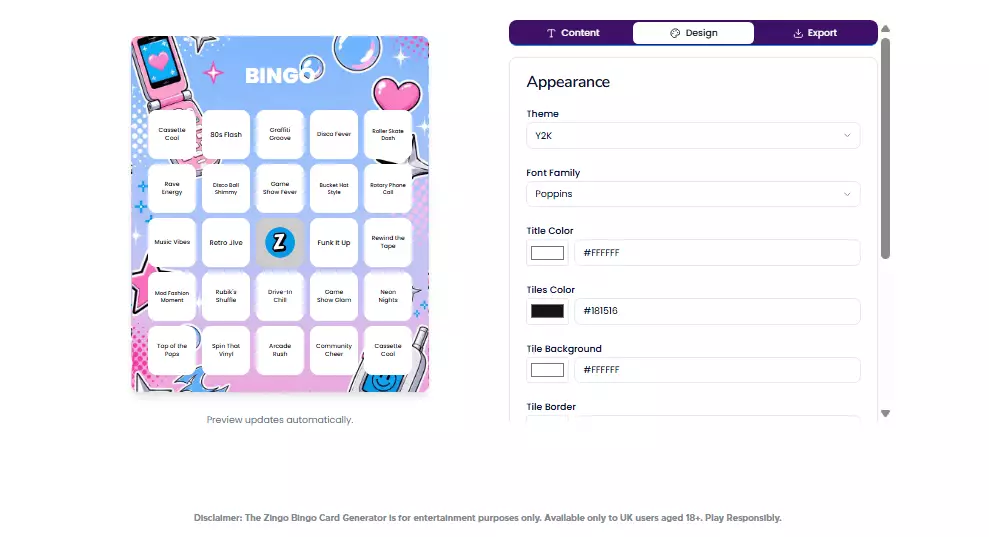
The Zingo Bingo bingo card generator provides a practical way to create bingo cards for FREE without having to draw every grid and arrange every number manually.
Instead of starting with a blank sheet of paper, you can use the generator when you want to get your cards prepared more efficiently.
It's particularly useful when you're creating several cards for a group and want to spend less time on the preparation and more time getting everything ready for the game.
How Can You Check Your Bingo Cards Before Playing?
A quick check can prevent confusion once the game starts.
Look over each card and make sure:
- The correct bingo format has been used.
- The number ranges are appropriate.
- The numbers are clearly visible.
- Different players have different cards where required.
- Any free spaces are correctly positioned.
- You have enough cards for everyone taking part.
If you're printing your cards, check the print quality too. Numbers that are faint or cut off can make the game unnecessarily difficult to follow.
Can You Create Bingo Cards for Different Numbers of Players?
Yes. You can generate as many cards as your game requires, provided they follow the rules of the chosen bingo format.
For a small gathering, a few cards may be all you need. For a bigger group, you'll need enough unique combinations to distribute among the players.
Planning the player count before generating the cards helps avoid creating either too few or far more cards than necessary.
Does Generating More Cards Change the Outcome?
Creating additional cards doesn't alter the random nature of a chance-based bingo game.
The number of cards you need is primarily a practical consideration based on how many people are playing and the rules of the particular game.
Results are determined by a Random Number Generator (RNG). Outcomes are based on chance only.
A generator is there to make the card-creation process easier. It doesn't change the underlying chance-based nature of gameplay.
How Can You Keep Bingo Play Responsible?
If you're playing bingo for money, treat it as entertainment and keep any spending within a budget you can afford.
TheUK Gambling Commission provides information about gambling regulation and player protections in Great Britain.
For practical safer-gambling advice and support,GamCare provides information and confidential support.
Whether you're creating cards manually or using a generator, understanding how the game works can help you approach it sensibly.
Frequently Asked Questions
What should I consider before generating bingo cards?
Start by choosing the bingo format, checking the required number range, deciding how many players will take part and working out how many cards each person needs.
How many bingo cards should I generate?
Generate at least one appropriate card for each player, then account for anyone who needs multiple cards. Having a few spare cards can also be useful for larger games.
Can I generate bingo cards automatically?
Yes. A bingo card generator can simplify the process by creating cards without requiring you to draw grids and arrange numbers manually.
Can different bingo formats use different card layouts?
Yes. Bingo formats can have different layouts, number ranges and winning patterns. Always check the rules of the format you're using before generating your cards.