

Since bursting onto the scene more than 25 years ago, Westlife have amassed a huge and devoted fanbase, with many growing up alongside the Irish boyband.
Now, Shane Filan, Nicky Byrne, Kian Egan and Mark Feehily are celebrating their incredible career with the Westlife 25: The Anniversary World Tour. The group have sold more than 55 million records worldwide, racking up 14 UK number one singles and seven number one albums along the way.
But what is it really like to become part of the huge Westlife machine?
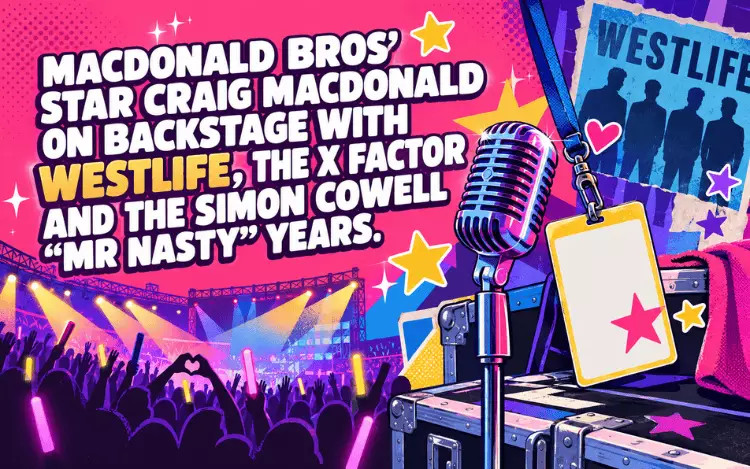
Brian and Craig MacDonald, otherwise known as the Scottish singing duo MacDonald Bros, know better than most, having supported the band on tour three times after finding fame on The X Factor in 2006.
Speaking exclusively to Zingo Bingo, Craig reveals what really happened backstage, from nights out to the sage advice that has stayed with them.
He also lifts the lid on the brothers’ own X Factor experience 20 years on, revealing why they regret not standing their ground with Simon Cowell, what really went on behind the scenes and the impact his infamous ‘Mr Nasty’ persona had on them.
How many times have you supported Westlife on their tours?
We've done three tours with them. The first time, we only did part of their Love Tour because we were also on the X Factor tour. They asked us to come back the following year for the Back Home Tour to do around 25 dates. Then in 2010, we supported them on their Where We Are tour. We were even hoping to join the boys for some dates on their most recent tour. Louis Walsh and Kian (Egan) were both keen but it’s a big production and support acts had already been selected. Maybe next time!
How did your first opportunity with them come about?
We were on The X Factor, and Louis Walsh was our mentor, so obviously Westlife would be backstage at some of the X Factor gigs. Even Brian McFadden and Delta Goodrem and people like that would be around. It was a great fit, and we got to know all the guys really well. Getting a tour like that was just phenomenal, especially because our album was out at the time as well. It was a great promotion for that. They're good guys. I can't say anything bad about them.
What is it actually like being on a Westlife tour?
It’s amazing. They have been doing it for years, so getting to watch them is such an experience. Plus they’re lovely guys. They’ve really remained grounded. By the time we joined the tour, the guys were a little older so they may have left the wild party days behind. The dressing room doors would be open and it was common for kids to be running around or even pet dogs. It was tame but a really lovely setting.
Did you get to party with them afterwards?
We had a couple of nights out. I think we were in Glasgow one night, and they took all the crew out and booked the whole venue of this pub. They were obviously performing the next night, and I don’t know how they did it. Personally, I’d be terrified going up in front of 15,000 people the next day with a slight hangover, never mind having a few drinks and then belting out these absolute classic songs. They weren’t wild, if you know what I mean. They just enjoyed themselves. They were quite happy sitting and hanging out with the crew. They were just good, easy guys to go for a drink with.
Did you experience the full force of Westlife fans?
Because we were straight off The X Factor, we were really recognisable to Westlife fans. There was a lot of crossover, with people wanting autographs and pictures. But we’d usually be tucked away on the side stage, behind the speakers, watching the guys perform. You’d have the fans behind you, and then Shane might come across the stage, look over and give us a wink.
Do you think there’s songs of theirs they get sick of performing?
When you’re on stage, you have to remember that some of those Westlife fans might only go to one gig that year, or it may be their first ever. That’s their one chance to see that song live, so every time you perform it, you have to treat it like it’s the first time you’ve ever sung it. You’ve got to sell it to the audience like you’re enjoying every single moment, and that’s what came across watching Westlife. I never once saw any fatigue or felt like they were just going through the motions. Even with all the dance moves, they put everything into it every single night.
Did they give you any advice about surviving the music industry that has stuck with you?
I remember having a conversation with Shane in the pub. We were still quite new, having just come off The X Factor, and the advice was basically to trust what you’ve got and what’s working for you. He told me there are always going to be people who love you and people who slag you off. Westlife have had people criticising them for the ballads and all that stuff, but look at their success. They can sell out an arena in Dublin eight or nine nights in a row. That was probably the biggest piece of advice we got, and it’s stuck with us to this day.
You finished fourth on The X Factor in 2006, how was that experience?
We were very young and, looking back, we were so immature when it came to the music business. We’d only ever played pubs and clubs, so we had no experience of the level The X Factor could take you to. It was surreal. It didn’t feel like real life. Looking back now, with 20 years of experience, I think we’d have enjoyed it more and probably done a lot of things differently. Simon Cowell was such a big figure and we were 19 or 20 with no experience, so if he told you to do something, you did it. We play loads of instruments, like violin, accordion, piano, guitars, but Simon would say, ‘It’s a singing competition.’ Looking back, especially when we were up against such a strong vocalist like Leona Lewis, I wish we’d fought a little harder to show that side of us.
Simon Cowell could be harsh during that era, but what was he like with you?
Simon really hammered us with criticism every single week, and watching it back a few years later, you realise it was just a TV show to him. I don’t think he appreciated the effect some of those comments could have on people. I don’t think he was deliberately trying to hurt anyone. He knew it made good television and the ‘Mr Nasty’ persona was great from a business point of view. But with how much more we understand about mental health now, I don’t think you’d get away with saying some of those things today.
Was there anything about the show that seemed spontaneous but was actually scripted?
Me and Brian can’t really watch reality TV nowadays because you can see there’s so much going on behind the scenes. On The X Factor, they’d sometimes give you lines to say or try to steer you down a certain road. Back then, they loved a sob story. Our gran had died a couple of months before the show, and they wanted us to say we were doing it for her, but we were very reluctant. We’re quite private and felt it had nothing to do with what we were doing on stage, so we had to fight a little to keep that out. We wanted it to be about the music and entertainment, not our personal story. It’s definitely not as spontaneous as it looks on TV.
Was there a moment on the show where you realised you were suddenly famous?
On The X Factor, you were very protected. You’d be picked up from the house, put in a car and taken wherever you needed to go, and there was always someone with you if you went out in public. But the minute we came fourth and went back to Scotland, that disappeared. We went to do an interview with our local paper, and suddenly there were 60, 70, maybe 80 people outside and we couldn’t get out. A shop had to let us escape through the back door. That was the first moment we realised just how much the show had changed our lives. For three or four years afterwards, you couldn’t just go to the pub or a club like you used to; you had to plan.
The X Factor had a lot of celebrity guests. Who was the nicest?
We met so many huge names on the show, like Rod Stewart and Lionel Richie, but the two I’ll never forget were Tony Bennett and Barry Manilow. Tony Bennett was one of the biggest stars ever, yet he was so humble. He sat down with us, gave us really positive advice, and you walked out thinking, ‘God Almighty, that’s a guy who’s done it all.’ Barry Manilow was the same. He spent a good couple of hours with us at The Dorchester and really took the time, rather than just ticking a box and promoting something. Those two were phenomenal.
Is there anyone from your series that you’re still in contact with?
The one people never seem to remember is Ben Mills, who came third that year. We got really close to him and still see him a couple of times a year. Ray Quinn, who came second, still texts now and again, and back in the day we had a group chat with people like Leona Lewis. But 20 years is a long time and naturally those things fade away. Ben is probably the one we still speak to regularly.
What are you guys up to now?
We’ve got two tours on the go at the moment, one is Celtic Nights in England and the other is The Sound of Scotland in Scotland. They both have around 30 or 40 dates. We’ve got two shows coming up that have sold out, which we still can’t believe after all these years. Twenty years on, we’re still thinking, ‘How are we keeping this going?’ But it keeps selling year after year, so we’re just happy doing what we’re doing.